Whither Punjabi—pure or corrupt?
By
Zubair Ahmad
The Minute Mirror: May 12, 2026
Zubair Ahmad
The duty of the poet is only indirectly to the people: his direct duty is to his language, first to preserve and second to extend and improve.”
T S Eliot.
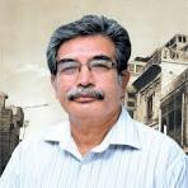
Amarjit Chandan is a London based celebrated poet, writer, editor, translator and activist. He has written eight collections of poetry and five collections of essays in Punjabi. He has been called “the global face of modern Punjabi poetry.
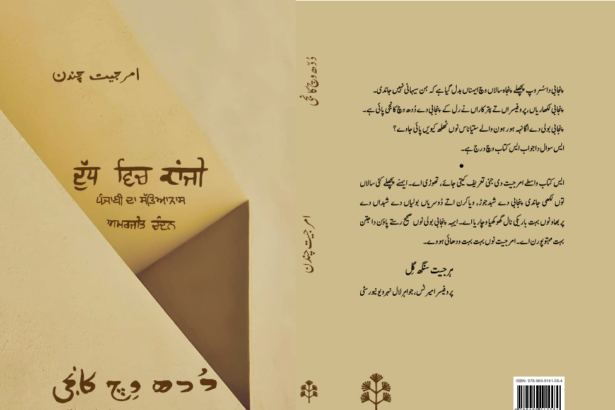
His work has been translated into many languages including Arabic, Brazilian-Portuguese, Catalan, Greek, Italian, Slovene, Spanish and Turkish. The English anthologies are titled: “Sonata For four Hands”,(2010) “The Parrot, The Horse & The Man” (2017) are titles of his English translation. Four of his books had been published in Shahmuki from Lahore. Now he has surprised the Punjabi reader by writing a book on Punjabi language and linguistics titled: “Dudh Vich Kanji: Punjabi Da Satanas”. A book which was supposed to have been written by Punjabi writers in our part of world is written by someone who lives abroad.
The case of Punjabi language is anomalous and atypical. On the one hand we are struggling to introduce Punjabi as a medium of instruction in our primary classes (in western Punjab) and on the other hand a controversy is going on which Punjabi language should be written? The language used by classical poets from Baba Farid to Khawaja Farid or the language we speak in our homes and locale? Chandan ‘s book explores the corruption, pollution and distortion of Punjabi language, hence the name “Dudh Vich Kanji”, milk is considered sacred and is source of sustenance in Punjab. For Chandan, our language is like milk but is polluted by “Kanji”,( Gajar Kanji Recipe,Fermented Carrot Drink).
In the introduction Chandan writes: “Half a century ago, in East Punjab, Punjabi scholars and writers used to be concerned about the preservation and development of their language. Now such concern is nowhere to be seen. A silence has descended, like the quiet that follows after a calamity has already occurred. Whatever ruin could befall Punjabi has already taken place. Neither scholars, nor writers, nor journalists seem to worry about it anymore.”
A preface specially written for Pakistani Punjabi edition, titled as, “Calls in the desolation”, he ponders: “In 1851, the British colonial government, in one of its reports, described Punjabi as the language of “uncouth rural people.”
Now even the meaning of mother tongue has changed. A mother who speaks to her children in Urdu-Hindi cannot claim that Punjabi is the mother tongue of those children.
A mother tongue is a national question, not a religious or class issue.”
Prof: Harjeet Singh Gill is an internationally acclaimed linguist and Professor Emeritus at Jawaharlal Nehru University, is full of praise of Chandan and his book. He severely criticized the stalwart of Punjabi language: “The question is not whether the language is pure or not. A language has no independent existence by itself. Every language must move forward along with thought. If the thinking itself is flawed, how can the language be sound?
Consisting of 198 pages, there is a very comprehensive chronology of Punjabi language of important events starting from Amir Khurso in11thc up till 2020 at the end of the book. This chronology is titled as “Punjabi Boli Di Jantry”. Another very important feature of the book is to publish pictures of all main stalwarts of both Punjab who have contributed towards Punjabi language, like Bhai Kahn Singh of Nabha state, Max Arthur Macauliffe, Dhani Ram Chatrik
GB Singh, Sahib Singh, Teja Singh, Sohan Singh Josh, Mohan Singh Ubroi Diwana, Sant Singh Sekhon, Sardar Khan, Piara Singh Padam,Asif Khan, Najm Hosain Syed. Tanvir Bukhari,Padre John Newton, Igor Sereberyakov, Denis Matringe and Natalia Tolstaya.
Chandan has discussed meticulously, the grammar, syntax and vocabulary which is being corrupted or deviated. In one of his early chapter “ Ik dī hichkī” he gives example of many writers who have used the word “IK” just for nothing and blindly and this includes writers like Amrita Preetem. He accuses Sant Singh Sekhon specially who was found of Sanskrit and Hindi and used blindly these languages that so much so that a western Punjabi reader couldn’t understand a single line of literary criticism of Eastern Punjabi criticism.
Punjabi ‘s post-graduate classes were started in 1950-51 in Punjab University, Chandigrah and Sekhon became its first head, so he introduced a kind of criticism which was fully Sanskritsed and Hindised.
Chandan laments that Punjabi has changed so much in the last two decades or so that the writers and journalists are writing such language in Gurmuki words which is reduced in English or Hindi. Charan Singh “Shahid”, Hira Singh ‘Dard’, Sohan Singh ‘Josh’ Gur Baksh Singh who were founders of modern fiction and poetry used to write in pure Punjabi but from 1950 and onward Sekhon entered forcedly the grammar of English and Sanskrit vocabulary so heavily that it had changed Punjabi language and then other professors and students also started following him.
He deliberates then about two kinds of scripts of Punjabi. “Now Punjab stands divided between two countries, two scripts, and two linguistic traditions. The emotional conflict of Sanskrit versus Arabic–Persian continued for a long time. By linking language with religion and caste, Punjabis harmed not only themselves but also their language and cultural heritage. “
But there is a basic difference between East and West Punjabi writers. While East Punjabi writers boast about using Sanskrit vocabulary, in West Punjab any writer who borrows Persian or Urdu words is considered weak and idle writer. It’s believed that why to use a Urdu or Persian word when we have its substitute. Many writers who have established themselves, have used pure and good Punjabi. The good example is Nain Sukh, who writes in his own Shahpuri dialect or “Bar di boli”(Sargodha) and has never compromised on it. As for criticism, writers like Najm Hos a in Syed, Mus h taq Sufi and Saeed Bhutta used pure Punjabi while discussing most modern ideas.
The two scripts of Punjabi have also been used by the enemy of Punjabi. Whenever there is talk of implementing Punjabi, the opponents say that Punjabi don’t have a single script so it is not an established language. They forget that Urdu is now read in Devnagari script and Manto and Faiz is also read in Devnagari in India. The two scripts have never stopped the progress of Punjabi literature. As religious connotations are attached with Gurmukhi and Shanmukhi so nothing can be done. The “Name” of Shanmukhi is not liked by Chandan but here in West Punjab no body objects it. The word “Shah” is used lovingly and respectfully too. It doesn’t mean kings or only Syed. Surjeet Patter when wrote a song about opening of Kartar Pur, used the word “Nanak Shah Fakeer “.
Another very basic difference between Eastern and western writers, is that Western writers are rooted in their classic and they read and absorb all poets From Baba Farid to Khawaja Farid. Gurmukhi writers don’t read classic except Guru Nanak or Baba Farid. The scholarship of Gurmuk h i scholars is very poor in editing classical poets. Here around 3 editors have edited Heer Waris Shah with good editing, annotations and meanings. There is resistance in western writers to borrow freely from Urdu or Persian.
Chandan in the book has said that he didn’t come across a single Punjabi linguist while writing this book, he is right, writing a language is a conscious act and we should remain true to our language. Basically , the book is about the story what went wrong in East Punjab ‘s Punjabi, written in Gurmuki. Having said that , it gives a very good information about the distortion of Punjabi in East Punjab and its beginning of dis t ortion in 1951. So we can the loss to Punjabi language done by the partition of Punjab.
Chandan ‘s book is a must read for those who want to write in Punjabi, a pure and modern Language.
Dudh Vich Kanji: Punjabi da Satyanas
On Punjabi language and Linguistics
By Amarjit Chandan
Pages:199
Kitab Trinjan,Mian Chambers, 3 Temple Road, Lahore.