Forgotten Masters Of Hindi Cinema: Rediscovering A Golden Age
Dr. Ishtiaq Ahmed
The Friday Times – 6.06.2026
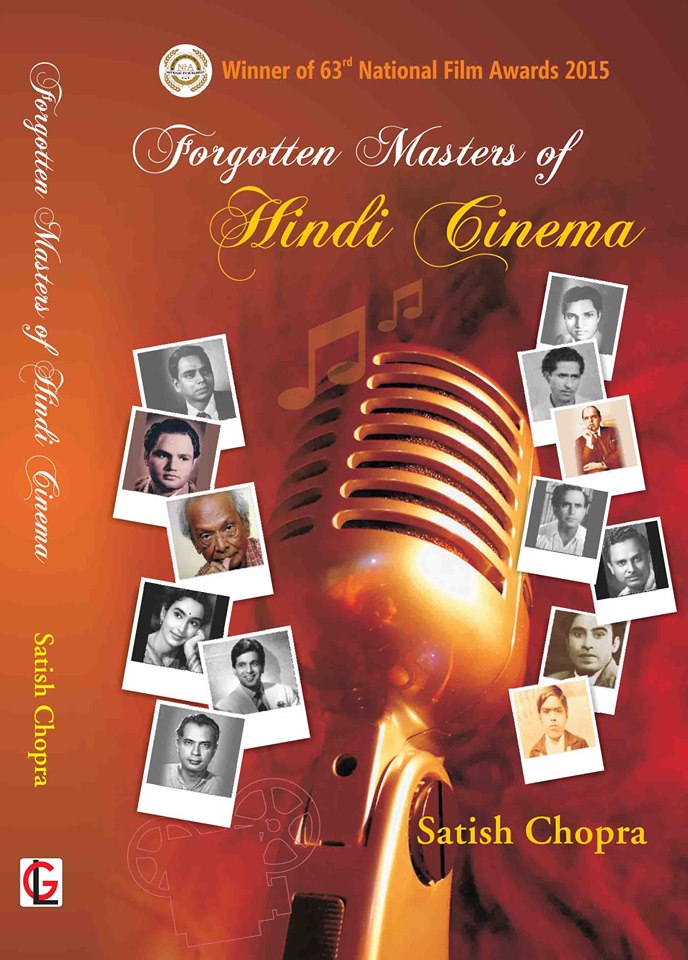
Forgotten Masters of Hindi Cinema is a fascinating account of a man who retired after working in the Central Bank of India, while his real passion was films, songs and the men and women who catered to his sensitive and artistic soul Dr. Ishtiaq Ahmed Features June 16, 2026
In these dreary times of war, genocide and other grotesque manifestations of human iniquity, it is but natural that one seeks refuge in the positive and uplifting aspects of human nature. Nothing provides greater solace than the creative urge expressed in song, music and drama, which manifestly capture the redeeming features of human nature. I was therefore greatly pleased to read Satish Chopra’s Forgotten Masters of Hindi Cinema.
At the beginning of the 20th century, film and cinema emerged as popular forms of storytelling about love, happiness and tragedy, and the whole world was transformed by the entertainment they provided to all classes of society. Not surprisingly, the Indian subcontinent embraced that technology with open arms. Here, people had down the ages expressed their feelings in song, music and dance, often to tell some epic love story. Now, a revolutionary new technology has arrived to carry on that tradition and practice on a much grander scale. It started with silent movies where live orchestras provided song, dance and background music, but in 1931, talkies supplanted the silent era of films.
Lahore-born Satish Chopra (1942), who now lives in Delhi, has authored a book, a winner of several prestigious awards, which presents those pioneers of films who created magic during the formative and most melodious period of Hindi (more correctly Hindustani) films during the 1930–1960s. The focus is on music directors, but Chopra includes some actors, lyricists, filmmakers and directors as well.
His greatest fascination is for K. L. Saigal (1904–1947), and that is undoubtedly where such a book must begin. Besides listing some of the greatest songs sung by Saigal, we also get to know him vividly as a human being as well. As a singer, Saigal created a new genre of film singing which expressed love, tragedy and pathos with equal ease and grace. Later, many singers were to emulate his style before they established their own distinctive credentials: Mukesh, Talat, Manna Dey, Mohammed Rafi and Kishore Kumar. Saigal was kind and generous but simultaneously given to heavy drinking, which resulted in his early death. One can think of Saadat Hasan Manto as another creative genius whose alcoholism led to his untimely death. Another genius who died very young, in fact almost as a child, was Master Madan, though in his case it was because of the over-exploitation of his talent by his family to a point that he could not bear the strain, and he died.
The Golden Calf Still Stands!
This outstanding book would attract great interest in Pakistan, especially because someone born in Purani Anarkali, Lahore, is telling the story
Among Chopra’s selection of music directors are all-time greats such as Anil Biswas, Khemchand Prakash, Husnlal-Bhagatram , Naushad, Sajjad Hussain, Shyam Sunder and Roshan. Those maestros gave the subcontinent songs which continue to touch and move audiences even now. O. P. Nayyar and Madan Mohan are mentioned, but in the context of some happenings and events. If I were to share my choice of music directors, it would be very similar to that of Chopra. He has taken great pains to capture not only the creative aspects of the contribution of those maestros but also their personalities.
The author also praises the genius of Kidar Sharma, who was a multitalented personality. He wrote songs, film stories and scripts, produced and directed films, and gave opportunities to many artistes. Among the songwriters, Chopra chooses Shailendra. As a film lyricist, Shailendra was perhaps the best, but I wish Rajinder Krishan had also been included. The omission of Sahir Ludhianvi, Majrooh Sultanpuri and others is understandable because the focus is on film lyrics rather than formal poetry, and Shailendra is generally rated as the best in that department.
A chapter is devoted to highlighting actress Nutan’s sterling performance in Bimal Roy’s Bandini. The film is based on a famous story by a Bengali writer, Jarasandh. Nutan was indeed a very accomplished artiste, and I remember when I saw Bandini, it profoundly impressed me.
Another interesting feature of the book is that three versions of the classic story of Devdas are discussed and compared. Saigal played Devdas in the first version (1935), Dilip Kumar in the second version (1955), and Shah Rukh Khan in the third version (2002). The first two were close to the austere surroundings in which Devdas lived an unhappy, melancholic life.
The third version by Sanjay Leela Bhansali typically contextualises the tragedy of Devdas in ornamental melodrama. I agree with Satish Chopra; the third interpretation is unconvincing, just as I found Bhansali’s serial on Heera Mandi far removed from the real Heera Mandi of Lahore with its narrow lanes, dark rooms and sordid lives.
Khaksar Massacre 1940: The Forgotten Tragedy Before The Lahore Resolution
Forgotten Masters of Hindi Cinema is a fascinating account of a man who retired after working in the Central Bank of India, while his real passion was films, songs and the men and women who catered to his sensitive and artistic soul by their outstanding performances on the silver screen. This outstanding book would attract great interest in Pakistan, especially because someone born in Purani Anarkali, Lahore, is telling the story. An Urdu edition would be very welcome.