BY Murtaza Razvi
Date:03-09-06
Source: Dawn
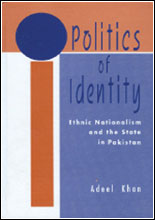 This brilliant academic from Australia has dwelled at length on telling us Pakistanis what he thinks is wrong with us. His is not the voice of a sympathetic detractor or that of an interlocutor; it’s the voice of a cold-blooded detective whose scope of academic inquiry stops at identifying what went wrong, when and how. The book shows no silver lining in the clouds of history which have gone into shaping ethnic and state nationalisms in this country. Dr Khan, much like the ruling establishment of the country he is dealing with, talks at you and not to you.
The book is divided into nine chapters. The first, entitled “Crude thinking”, sets the tone for what is to follow. Agreeing with Benedict Anderson, Dr Khan defines the scope of his study at the outset. He is convinced that an officially endorsed nationalism is a bunch of lies whereas ethnic nationalism(s), which may develop in reaction to the lies being sanctified as facts by the state, relies heavily on myths of a separate language, culture and the entire wherewithal of the phenomenon. Thus defined, the three chapters that follow present the theoretical framework, comprising discussions on what are nationalism, ethnicity, the colonial and the modern state.
The theoretical debate is disposed of with the emphatic conclusion that the state in Pakistan “nationalised” the colonial state (structures of power and politics); though, admittedly, the arguments cited in support of the conclusion are sound — if not irrefutable, indeed. Right from its inception as a new Muslim state on the subcontinent, Pakistan’s has been a story of elite groups grabbing power and holding on to it to the detriment of a more equitable, democratic process, which could not take root. The Bengali majority had to go start its own country because its aspirations found no resonance in the elite-dominated West Pakistan, where, Dr Khan implies, a Punjabi-Mohajir nexus with Urdu as its weapon and privilege-seeking as the ultimate goal, denied the Pakhtoons, the Baloch and the Sindhis of their share in power. Hence the birth of two streaks of nationalism, one espoused by the state and the other(s) by respective suppressed ethnic groups.