By Majyd Aziz
Dawn : Nowember 30, 2004
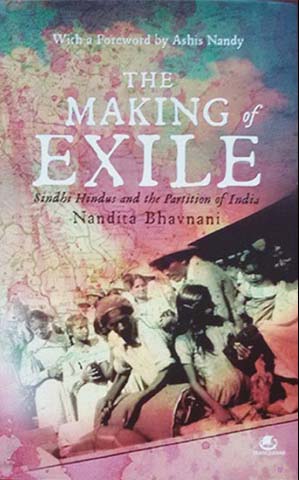
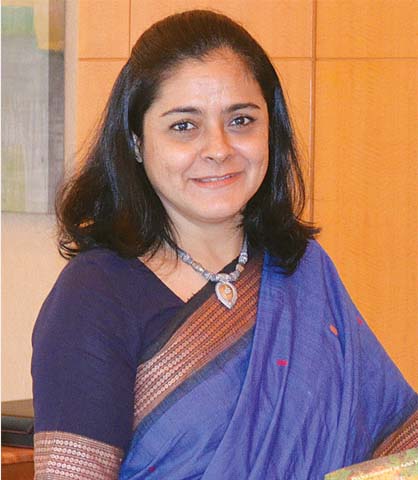
Gateway House Mumbai, a foreign policy think tank, invited me in July 2014 to a brainstorming session on Indo-Pak trade. On my right sat an elegant, smiling lady in a resplendent blue sari. Nandita Bhavnani is a chartered accountant, lawyer and investment banker who did her MA in anthropology. In addition to this, she is also an author. She informed me that her book on the migration of Sindhi Hindus after Independence was to be launched in Mumbai that very evening. I was surprised that she wanted to present it to me and that I was the first Pakistani to receive it.
In subsequent email interactions, she informed me that “after completing my MA, I started studying the Sindhi community in India as part of a research project, ‘Reconstructing Lives’, which explored memories of mass violence at the time of partition. I interviewed several elderly Sindhis in different parts of India. I learnt to speak Sindhi. Later, I also learned to read and write Sindhi in the Perso-Arabic script.”
She revealed that “In April 2001 I first visited Sindh and travelled to Karachi, Hyderabad, Larkana and Sukkur. This trip turned out to be a landmark event in my life. My interest in Sindh, its people, culture and history only deepened, and the scope of my research expanded. I visited again in December 2003 and then in April 2014 to present a paper on ‘Sindhi Media in India’ at the conference on Sindhi Media at the Federal Urdu University in Karachi.”
Decades later, the experience of Partition remains a divisive and deeply debated one
Ms Bhavnani has authored three well-researched books. The Making of Exile: Sindhi Hindus and the Partition of India (2014), a detailed and multi-faceted history of the Sindhi Hindu experience of Partition; Remembering Mohan T. Advani: The Man and His Legacy (2012), a biography of Mohan Advani who founded Blue Star Ltd in 1943 that today is Indian industry’s leader in central air-conditioning and commercial refrigeration; and I Will & I Can: The Story of Jai Hind College (2011), a story of how Sindhi Hindu Professors at DJ Science College in Karachi migrated to Mumbai after Partition and established a new college within only a few months. She disclosed that “Currently I am working on a book on the beauty of Sindhi culture and the highlights of its history.”
The Making of Exile portrays the trials and tribulations of Sindhi Hindus who, either voluntarily or unavoidably, left ancestral abodes to dwell in territories that manifested into a new beginning, more so with feared uncertainty. Sindhi Hindu exiles really did not ‘feel’ the ‘Freedom at Midnight’ experience because of the hardship, prejudice and fear.
The author takes substantial advantage of her meticulous research to ensure that the reader experiences and absorbs the mosaic of events that impacted on the immigrants, both in their halcyon past and the future. She titillates the appetite of readers with nuggets of history and background, compelling us to make their own conclusions about the facts, attitudes, legends, compulsions and bureaucratic and political decisions that this book very vividly projects.
The foreword, “In the Imagined Landscape of Sindh”, by Dr Ashis Nandy of Centre for the Study of Developing Societies and the Committee for Cultural Choices in Delhi is in itself a masterpiece and merits reading more than once.
In her prologue, Ms Bhavnani refers to the Sassui-Punhu legend. “I wanted to explore the many different bittersweet facets of the Hindu-Muslim relationship in Sindh. This would cover not only history but also prevalent myths and legends among the common people. I really like this legend because it shows the love between a Hindu and a Muslim, but they are not allowed to live happily together.”
In her prologue, Ms Bhavnani refers to the Sassui-Punhu legend. “I wanted to explore the many different bittersweet facets of the Hindu-Muslim relationship in Sindh. This would cover not only history but also prevalent myths and legends among the common people. I really like this legend because it shows the love between a Hindu and a Muslim, but they are not allowed to live happily together.”
|
|
|
Nandita Bhavnani |