Asif Noorani
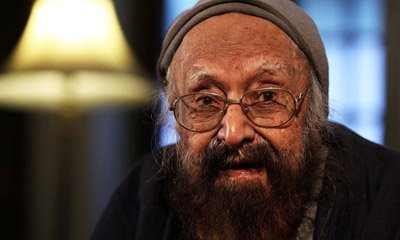
I had never spoken to a Sikh. Strangely, there were no Sikh students in the Christian missionary school, where I studied in Bombay. There was an assortment of Hindus, Muslims and Christians but not a single Sikh in the school. By the way, my best friend was Subhas Thorat, a Maharashtrian Hindu.
Having listened to one-sided stories of Sikhs slaughtering Muslims in East Punjab at the time of Partition, I was scared of them. Their turbans and beards made them appear all the more fearsome.
However, on migrating to Lahore in 1950, I was struck by the names of Hindus and Sikhs etched on rectangular marble slabs, embedded on the gates of bungalows, which they left behind, when they crossed the newly carved border. That was in the upscale locality of Model Town. For the first time, I realised that the Muslims were no less to be blamed for the riots.
It was much later in 1964 that I first spoke to a Sikh. That was when I was visiting what was then Bombay. He was a taxi driver from Gujranwala, a town I remembered only for its mouth-watering tikkas. I spoke to him in broken Punjabi. The man became emotional. I told him that I was from the other side of the Great Divide and had been to Gujranwala once. He spoke warmly of his native town and downgraded mine in comparison. He was so excited that most of the time he looked back at me as I was sitting on the backseat. Death in a traffic accident was what has always scared me so I moved hastily to the front seat when the cab halted at a traffic signal. He refused to accept the fare when we reached my destination.
By that time, I had read a lot of Partition literature and one of the gems that moved me was Khushwant Singh’s Train to Pakistan. Unlike now when there are so many well-known subcontinental novelists, with or without true literary merits, who write in English, in the mid-50s there were only four – R.K. Narayan, Raja Rao, Dr Mulkraj Anand and Prof Ahmed Ali.
Khushwant, as he preferred to be called, joined the ranks after he had made a name for himself as a scholar, who had written the widely-acclaimed The History of Sikhs in 1953.
Train to Pakistan was published in 1956 and I read it three years later. Bapsi Sidhwa’s novel Ice Candy Man, on the same theme, was to appear at least three decades later.
Listen to Khushwant Singh read from his novel, Train to Pakistan
A cousin of mine who was a civilian POW at Roorkee returned to Karachi sometime in late 1972 with a trunk full of copies of The Illustrated Weekly of India, a magazine I saw after years because the import of journals and newspapers from the two countries ceased after the 1965 war. It was a far cry from the dull and drab magazine that it had become before Khushwant took over.
In 1976, I visited Bombay (read India) after 11 years and phoned Raju Bharatan, the man who wrote knowledgably on film music and was in this field my ideal. He was in those days working as the senior assistant editor of The Weekly, as it was commonly called. One of his colleagues was Fatima Zakaria, the wife of Dr Rafiq Zakaria and mother of Fareed Zakaria, who was in those days a student. Much to my disappointment, I learnt that Qurratulain Hyder had resigned from The Weekly. He and Khushwant, as I was to learn later, weren’t on the best of terms, though Urdu was a common bondage between the two persons of letters.