Once a small city of gardens and pedestrian charms, Lahore now has a chaotic population, a metro-bus service and a myriad of privatized pleasures. Mohammad A. Qadeer on the changing spirit of a fabled city
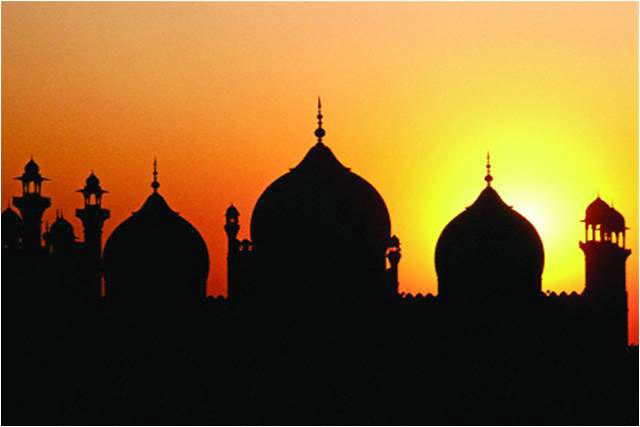
Arriving in Lahore after 6 years’ absence instantaneously brings this born and bred Lahori in touch with the unselfconsciously assertive but easy-going manners of this city. At the airport, the porter who is so insistent to help you with your luggage immediately ‘sells’ you to another porter, while rounding up some other passengers to earn his commission. He does it with such finesse and indifference that you dare not ask where he has disappeared while someone not seen before is grabbing your luggage. This guile, softened by protestations of regard and affection, is the spirit of Lahore.
It is difficult not to view Lahore through the narratives of nostalgia forged by generations of visitors and residents. We see the city through the eyes of Bapsi Sidhwa, A. Hameed, Gopal Mittal, and Pran Nevile. Theirs was a city of gardens, abode of saints, reverberating with music, poetry and literary discussions, enlivened by fairs, tea houses, love of food, kite flying and a hotspot of politics. This Lahore was a small city of half a million residents. It could be circumnavigated on a bicycle or tonga. Its communal harmony was cultivated in the mohalla (neighbourhood) culture of mutual trust and interdependence. The teahouse life that enthralled these writers was available everywhere, from roadside stalls to Arab Hotel, Pak Tea House and Chinese Coffee House. The social life in Lahore of those days was largely lived in the public sphere. Literary activities were widely shared. This memory of Lahore continues to define its image.
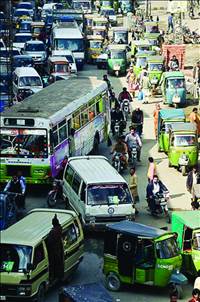
The Lahore of those days is a thing of the past. It has grown to about 12 million in population, almost 25 times in 60 years. It is now as much a city of migrants coming from all across the country but primarily from the rest of Punjab, as it is of ancestral Lahoris whose culture is imbibed by all comers. It has been massively commercialized, so much so that the mysterious streets of the historic walled city, where Kipling’s Kim used to disappear, are now turned into smuggled goods markets and knock offs’ manufacturing hubs. They are crowded and mysterious but in a different way.
The present city stretches for miles in all directions, touching the international border with India in the east, jumping across the river Ravi in the west and spilling out beyond Raiwind in the south. It is bigger and richer, highly commercialized and massively built up. It requires motorized transport to move around. Its streams of noisy motorcycles penetrate the narrowest streets of the city.
There is no road that is not choked with traffic and that too of automobiles. The leisurely ride in a tonga has been lost to the commuting in bone-shaking rickshaws and crammed vans. Recently the fear of crime and terrorism has drained public life of peace and trust. The experience of Lahore now is in sharp contrast to its long-held memory of laidback life.
|
The cleaning woman was quite satisfied with the metro bus service |