|
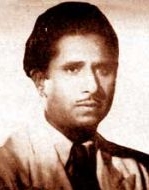
A perfectionist of film-music:Sajjad Hussain
Satish Chopra Hindi film panorama after the commencement of talking era, witnessed a variety of personalities attached to different faculties of production; may it be acting, direction, photography, editing, dialogue-writing, music composing and or singing. In the middle of a large number of the music composers, we had some rarest of the rare gems, who not only crafted some captivating melodies, but also shaped the destiny of a large number of singers. This was in view of the fact that these masers had a profound understanding of lyrics, instrumentation, classical music base, the voice quality of the respective singer and insight of the eminence of recording. One amongst such music-directors was Sajjad Hussain, who was known for his perfectionist and a contentious personality. He fashioned some immortal melodies, which were entirely different from all others. But sadly with the passage of time he has been completely forgotten. A few lines about the career-graph of Sajjad Hussain. He was born at Sitamau (Central Province now Madhya Pradesh) on 15 June, 1917. His father Mohd Amir Khan was a sitarist. But, Sajjad could not confine his learning to sitar only. He additionally learnt playing Veena, Jaltarang, Accordian, Violin, Spanish & Hawaiin Guitar, Flute, Piano, Banjo, Mandolin and Harp. Thereby he could brilliantly deploy these instruments for the background music effects and also created some enthralling sound effects. In All India Music Conference held at Kolkata in the year 1956; where greats of classical music such as -Vinayak Rao Patvardhan, Ali Akbar Khan, Allaudin Khan, Bade Ghulam Ali Khan, Ahmed Jaan Thirakwa and Nikhil Banerjee were present; Sajjad Husain played classical ragas-’Shivranjani’ and ‘Harikauns’ on Mandolin. The listeners including the maestros were spell bound at his classical playing of Mandolin, which is considered a completely un-traditional musical instrument. Sajjad Husain as music director created some immortal melodies in the voices of Noorjehan, Rattanbai, Nirmala Devi (mother of actor Govinda), Lata Mangeshkar, Suraiya, Geeta Roy, Asha Bhonsle, Mohd Rafi, Talat Mahmood, Surender and others. He came to Bombay (now Mumbai) in the year 1940 and was introduced to Mir Allahbuksh (father of Meena Kumari) who was a composer and associated with Minerva Movietone. Mir Allahbaksh was very much impressed with Sajjad’s mandolin playing, as a result he took him as his assistant. Later on he joined another composer Pt Hanuman Prasad and assisted him for the music of film ‘Gaali’ (1944). In this film Sajjad composed two songs of Nirmala Devi -‘Aag lagey saawan mein’ & ‘Ab aa jaa dil na lagey’. Sajjad Husain got his major break in the year 1944 for the film ‘Dost’ starring-Noorjehan and Motilal. For this film Noorjehan sang some brilliant melodies- ‘Badnaam muhabbat kaun karey’, ‘Ab kaun hai mera’, and ‘Koyee prem ka de key sandesa’. The film till date is remembered amongst the ardent music lovers of Indian sub-continent because of these musical super-hits. It will not be out of place to mention that what Noorjehan sang for Sajjad, it was totally different than what she sang with all other composer, whether in India or later on in Pakistan. If you have listened to these captivating melodies, you must have observed the beauty of delivery of the word ‘Badnaam’ and a charismatic pause thereafter. Again owing to her expression of thought and an extra-ordinary quality of sur, it was rated as a class in itself. Then, the pain of parting and sorrow transformed in other numbers- ‘Ab kaun hei mera’ and ’Koyee prem ka de key sandesha’ was indeed captivating. Overall, the melodies simply provided an incredible impact on the zealous music lovers. However, Shaukat Hussain Rizvi, the paramour and later on the husband of Noorjehan, who produced the film ‘Dost’, after viewing its grand success observed that entire credit for the success of these songs goes to Noorjehan, who sang these fabulous melodies. Consequently, Sajjad could not digest such remarks and vowed not to compose a song for Noorjehan for her future films. As a result, for her next film ‘Jugnu’ (1947), the music was composed by Firoze Nizami. Eventhen, Noorjehan admired and respected Sajjad Husain the most. According to her, Sajjad Husain was the greatest composer amongst all. “He was a man of high self-esteem. Shaukat was rude to him and Sajjad warned him in that insulting tone. Shyam Sunder and Naushad are also great but nobody can ever reach the level of Sajjad Hussain.” She is reported to have said. Down memory lane, in his subsequent films Sajjad composed a number of wonderful melodies viz ‘Bhool ja aye dil muhabbat ka fasana, kisi se dil lagana’ -Lata Mangeshkar and ‘Saajna din baahure hamare’ -Geeta Roy for film ‘Khel’ (1950) and ’Aaj mere naseeb ne mujhko rula, rula diya’ -Lata Mangeshkar -film ‘Hulchal’ (1951) which bears the complete signatures of the maestro. In film ‘Saiyyan’ (1951) Sajjad composed seven classic melodies and each one was different from the other. In particular, the singer -Lata and the composer created an aura of pathos which was amazingly different in -‘Kismat mein mein khusi ka naam nahin___ey gum ke savere tu hi bata’, ‘wo raat din wo sham ki guzari hui kahaniayan’ & ‘Kaali kaali raat re, dil bara satay teri yaad aye’. The sentiments expressed in the lyrics came spectacularly alive. Sajjad Hussain was perhaps at his best in film ‘Sangdil’ (1952). Each of its eight melodies was a jewel! Just listen to ‘Dharti se door gore badlon ke badlon ke paar aja, aja basa lein naya sansaar aja’ -sung by Geeta Roy & Asha Bhonsle. In this number, the flute played in the prelude and the accompanying orchestra was simply soul- stirring. Then, there was a rarest of the rare bhajan -‘Darshan pyasi ayee daasi, jugmug deep jalain’ -sung by Geeta Roy. Accompanying use of Jaltarang & other instruments was simply brilliant & bewitching. And, ‘Wo to chale gaye aye dil, yaad se unki pyar kar’ - was a rare and deep rooted and a heart-throbbing Lata number. ‘Aaj preet ne tord dee bandhan ki deewar___ dil mein samaa gaye sanam’ -a classical classic duet of Talat & Lata and ‘Ye hawaa ye raat ye chandni, teri ik adaa pe nisaar hai’ -was certainly one of the finest renderings of Talat. Thus making the film, till date as one of the greatest musical hits of all times to come. But, what an irony! In spite of creating such crest melodies, he could merely get a chance of providing music for just 14 films. The reasons were very simple. He was a highly perfectionist, egoist, uncompromising and extremely short-tempered. Above all, he suffered from a highly complex behavior. In one of the rehearsals he told Lata Mangeshkar -“Latabai, ye Naushad miyan ka ganaa nahin, ganey mein dhyan dijiye’. Another time, he observed -“Kishore Kumar should have been named as Shor Kumar and Talat Mahmood as Ghalat Mahmood”. As a perfectionist, he took 17 retakes of ‘Yeh hawa ye raat ye chandni’ sung by Talat Mehmood for film ‘Sangdil’. As stated, D.N. Madhok wrote all the eight songs for film ‘Saiyyan’. Each of them was a super-hit. But, due to their personal conflict; he never composed thereafter, a song penned by Madhok. In the year 1955 he composed music for film ‘Rukhsana’ and after a considerable gap of eight years, in the year 1963 he got a chance of composing music for historic film ‘Rustam Sohrab’ -starring Prithviraj Kappor & Suraiya. In this film, he once again created some memorable melodies viz ’Phir tumhari yaad aayee alla kasam’ in quawali style -sung by Rafi, Manna Dey and Sadat Khan and ‘Ab der ho gayeewallah’ sung by Asha Bhonsle. Then there was a outstanding Lata number -‘O dilruba’. The recordings of instrumentation of this film is a ‘Collectors’ Treasure’ for the passionate music lovers. In the year 1958 Madan Mohan, the renowned music director composed one of his songs -‘‘Tujhe kya bataun aye dilruba, tere samne mera haal hei’ in the voice of Rafi for the film ‘Akhari Dao’. The song was by all standards identical to Sajjad’s masterpiece -‘Ye hawaa ye raat ye chandni’ -of film Sangdil. On listening this Sajjad was furious, owing to the fact that Madan Mohan had copied his composition. In a get-together at the Music Directors Association, he asked Madan Mohan in a fit of anger, as to how he dare, without his permission to have copied his tune. Madan Mohan very calmly replied- “I could’nt find a better composer to copy”, which made Sajjad speechless! “He was an extremely talented man, very conversant with a large number of aspects of music and its harmony. But his temperament was his undoing, even if someone made a minor suggestion, he would turn on him and say - “what do you know about music?He fought with almost everyone. Owing to such attitude, he remained home most of his life and wasted his talent. But, the body of work he has produced, small as it may be, ranks among the best in Hindi film music.”-said Naushad. “By all standards Sajjad Hussain was an original, a genius music director, different from all others and each of his musical composition carried most difficult notations, which he himself used to create and took utmost pleasure out of it”- once observed Anil Biswas. “We get only once in our life-time, a music director like Sajjad”-bemoaned Noorjehan at the demise of the genius- Sajjad Hussain and added.-“At the beginning there are difficulties with everyone. I was always apprehensive when I sang for Sajjad Hussain Sahib because he was very particular. He never liked loud singing. Sometimes an alaap is sung rather loudly — he didn’t like that. He insisted all the musical instruments must be perfectly tuned. He played the mandolin extremely well and if a single musical instrument was slightly out of tune, it displeased him. Compromising was not in his nature.” “I often wondered when I sang for him: ‘Will he like it? Am I singing correctly?’ But I always wanted to work with him. Even now when you hear his songs, though the verses are sung in a high octave, they sound effortless. They aren’t painful to hear, nor do they sound as though they were strenuous for the singer. This was his approach and I found it a little difficult.”- said Lata. Sajjad Hussain died in oblivion. His last years were not exactly how they should have been. His genius went unsung. One wonders if the story would have been different had he been a little tolerant. Sajjad was a package deal- either take him in his entirety or forget about him. The waste of his talent is ultimately our loss. We have missed the hundreds of tunes that never got created by him, because he was never given a chance. What we have with us now is just an infinitesimal fraction of his untamed genius. We should be thankful for that. After all his music was eternal! Sajjad breathed his last on 21 July, 1995. The leitmotif of his lifetime, isolation, cast its shadow over his death too, when with the notable exception of Khaiyyam and Pankaj Udas none else from the film industry bothered to turn up to pay him their last respects. “It hurt”- admits his son, “but what is far more important is that to the last day of his life my father was happy. There was no bitterness, no regrets. He could have been hugely successful, made piles of money, but the only thing he wanted was to be acknowledged as a great musician and to live life on his own terms. And I think he achieved that.” halid Hasan, the famous Pakistani journalist once asked Noorjehan about her favorite song. She remarked that all her songs were like her children and she could not choose one. On insistence, she recalled a song from film ‘Dost’ -‘Badnaam mohabbat kaun karey’, composed by genius Sajjad Hussain.
|
|